Sometimes Healing Begins Before Reconciliation
If you’re reading this, you may be carrying questions that are difficult to say out loud:
Few experiences are as painful as watching your relationship with your daughter slowly change. Maybe she doesn’t call as often anymore. Conversations that once lasted for hours now stay on the surface. Perhaps she only reaches out when she needs something. Or maybe she’s chosen to create significant distance or cut off contact altogether. Every holiday, birthday, or family gathering becomes another reminder that something has shifted.
- What did I do wrong?
- Will my daughter ever come back?
- How do I fix our relationship?
- Is it possible to heal the mother wound when my daughter wants nothing to do with me?
If you’ve asked yourself any of these questions, I want you to know you’re not alone. Over the years, I’ve worked with many mothers who deeply love their daughters but feel heartbroken by the emotional distance between them. They aren’t looking for someone to tell them they’re bad mothers. They’re looking for hope. They’re looking for understanding. Most of all, they’re looking for a path forward. Before we go any further, I want to offer you something that may bring both relief and responsibility. You cannot heal your mother-daughter relationship while living in shame, blame, or guilt. Those emotions keep both mothers and daughters trapped in the same painful cycle. At the same time, healing also requires the courage to honestly examine your own part in the relationship. Both truths can exist at the same time.
You can love your daughter deeply and still recognize there are places where you could have shown up differently. I know this because I’ve lived it. Years ago, I had a difficult but honest conversation with my own mother about my experience growing up. It wasn’t easy for either of us. Instead of becoming defensive, she listened. She acknowledged my pain, accepted her role in it, and offered a sincere apology. Looking back, I realize something important had already happened before that conversation ever took place. Somewhere along the way, she had done her own healing. That moment changed how I understand restoration. Healing didn’t begin with the apology. It began long before that with two women willing to look honestly at their own story. That’s what this post is all about. It isn’t about convincing your daughter to reconnect or finding the perfect words to repair your relationship overnight. It’s about becoming the kind of woman who happens to be a mother who is willing to look inward, heal, grow, and leave the door open for restoration. Whether reconciliation happens next week, next month, next year, or unfolds one small step at a time. Because lasting change doesn’t begin when someone else changes. It begins when one person has the courage to say, “The healing can begin with me.”
Healing Begins With the Mother Who Is Willing to Do the Work
One of the greatest privileges of my work is sitting with mothers who genuinely want a healthier relationship with their daughters. Many come to me after months—or even years—of emotional distance. Some have been told by their daughters that they need space. Others have experienced limited contact or complete estrangement. Almost all of them arrive carrying the same mixture of fear, grief, confusion, and hope.
I often hear “I just want a relationship with my daughter.”, “I don’t know what happened.”,”I don’t know how we got here.”,”I don’t know how to fix this.”
Notice what they aren’t asking.
They aren’t asking for someone to tell them they’re terrible mothers. They aren’t looking for someone to assign blame. They’re looking for a safe place to understand their mother daughter relationship history.
I’ve also learned something else over the years. Many mothers have never had permission to tell their story. Most don’t really know the depth of their own mother-daugther history. No one taught them how to identify emotions beyond anger or frustration. No one showed them how childhood experiences shape adult relationships. Few were ever invited to explore how family patterns, emotional realities, generational themes, unspoken expectations, and unmet emotional needs can quietly pass from one generation to the next. Many spent decades simply surviving. So when their adult daughter begins pulling away, they’re left trying to solve a problem without ever having been given the language or tools to understand it. That’s why healing doesn’t begin by trying harder to convince your daughter you’re a good mother. It doesn’t begin by waiting for her to come around. And it doesn’t begin by rehearsing everything you wish she understood.
Healing begins with curiosity. Curiosity about your own story. Curiosity about what shaped you. Curiosity about the emotional patterns you inherited without realizing it. Because when you understand what shaped you, you begin to understand what may have shaped your relationship with your daughter. And that’s where real healing begins—not with perfection, but with the willingness to do the work.
Your Story Didn’t Begin With You
Once a mother becomes curious about her own story, something remarkable begins to happen. She stops asking, “Who’s to blame?” and starts asking, “What shaped me?” That question changes everything. One of the greatest misconceptions about healing the mother wound is believing it begins the day you become a mother. It doesn’t. Your mother-daughter story began long before your daughter was born. It began with the women who came before you. Your grandmother. Your mother. And the emotional patterns, beliefs, and survival strategies that were quietly passed from one generation to the next. When we slow down long enough to examine our family story, we often discover the same themes repeating themselves across generations.
- Women who felt unseen.
- Women who carried everyone else’s emotions.
- Women who believed being “strong” meant ignoring their own needs.
- Women who struggled to express emotions because no one had ever taught them how.
- Women who longed to be loved but didn’t know how to receive it.
- Women who were critical, judgemental.
- Women who were largely unknow
- Women who were emotional neglect
- Women who were emotionally starved.
- Women who with unrealized dreams.
- Women who were controlling, manipulative, and more to get their needs
These weren’t character flaws. They were survival strategies. Some women survived by overgiving. Others survived by staying busy. Some became perfectionists because mistakes didn’t feel safe. Some shut down emotionally because vulnerability had never been welcomed. Others learned to meet everyone else’s needs while quietly abandoning their own. The problem isn’t that these patterns existed. The problem is that survival patterns often become family patterns. And unless someone intentionally interrupts them, they continue shaping relationships from one generation to the next. That’s why healing the mother wound isn’t about pointing finger. It’s about gently asking, “What have I been carrying that was never mine to carry?” That question isn’t rooted in blame. It’s rooted in freedom. Because once you recognize the patterns you’ve inherited, you finally have the opportunity to choose different ones.
The Moment Everything Changed
I’ll never forget a mother daughter couple, I worked with who came into coaching determined to prove she was nothing like her own mother. “I spent my whole life trying to be different,” she told me. She loved her daughter deeply. She had worked hard to give her opportunities she never had. She believed she had broken the cycle simply because she had parented differently.
Then we began exploring her mother-daughter story together. The process was very uncomfortable for her. She had buried a lot of own experiences and struggled. Her daughter sat quitely as she witnessed her mother’s grief. Like many women, she could identify the things her mother had done that caused pain. What she hadn’t considered was how those experiences were still influencing the way she showed up in her own relationships. One day, she paused in the middle of our conversation and said, “I spent so much of my life trying to be nothing like my mother… I never realized I’m mothering from my own mother wound.” Not because she had failed. But because she had finally found the words for something she had felt her entire life. As we continued our work together, she uncovered another painful truth. Growing up, her mother had often looked to her not another adult, to meet emotional needs that belonged in adult relationships.
As a little girl… she became the listener.
- The comforter.
- The responsible one.
- The emotional caretaker.
She learned that love meant taking care of everyone else first. Then came the moment that changed everything. With tears in her eyes, she looked at me and said, “I didn’t realize I was expecting my daughter to meet some of those same emotional needs.” Not in the exact same way. Not intentionally. But that’s how unhealed wounds often work. They don’t usually repeat themselves exactly. They adapt. They become so familiar that they feel normal until someone has the courage to stop and ask why. That realization didn’t instantly repair her relationship with her daughter. Healing rarely happens overnight. But it transformed the way she showed up. She became less defensive. More curious. More willing to listen than explain. More interested in understanding than being understood. She stopped expecting her daughter to carry emotional responsibilities that had never belonged to her in the first place. Instead, she began meeting those needs through her own healing not emotional manipulation and control. And when she changed, the emotional climate of the relationship began to change too. That’s the power of healing the mother wound. It isn’t about becoming a perfect mother. It’s about becoming an emotionally healthier woman.
Generational Healing Begins With One Woman
One of the most hopeful truths I get to witness in my work is this: generational patterns can be interrupted. The women who came before you did what they could with what they knew. Now you have the opportunity to do something different. Not because you’re trying to erase your past. But because you’re creating a healthier future.
- Every time you choose curiosity over defensiveness…
- Every time you take responsibility without drowning in shame…
- Every time you learn a healthier way to communicate…
- Every time you meet your own emotional needs instead of expecting your daughter to carry them…
You are changing your family’s story……That’s what generational healing looks like. It doesn’t happen through perfection, deny, ignoring or silencing. It happens through awareness, unlearning, awaken emotional lanuage. It grows through humility. And it continues every time one woman decides,
“The cycle can stop with me.”
Once you begin seeing your relationship through this new lens, another important question naturally follows. If my daughter’s distance isn’t simply rejection… Then what is it really telling me?
When Distance Feels Like Rejection
When a daughter creates emotional or physical distance, most mothers experience it as rejection. And honestly, that’s understandable. When someone you love stops calling, pulls away during conversations, or limits contact, it’s natural to wonder if you’ve lost them forever. Many mothers describe the silence as one of the deepest heartbreaks they’ve ever experienced. But what if your daughter’s distance isn’t only about rejecting you?
What if it’s her way of trying to protect herself? So many get stuck there. It hurts to consider your daughter feels the need to protect herself. One of the most important shifts a mother can make is learning to become curious before becoming defensive. Because while distance certainly hurts, it doesn’t always mean your daughter has stopped loving you. In many cases, distance is simply the only tool she believes she has.
Distance Is Communication
Every behavior communicates something. Some people communicate through words. Others communicate through tears. Some communicate through anger. Others communicate through silence. Distance is often communication without words. It can be your daughter’s way of saying, “I don’t know how to keep doing this the way we’ve always done it.” That doesn’t automatically mean she’s right about everything. It doesn’t mean you’re entirely responsible for where the relationship is today. And it certainly doesn’t erase the love you’ve given throughout her life. It simply means there may be pain, unmet needs, or unresolved experiences that haven’t yet found a safe place to be expressed. When mothers begin seeing distance as communication instead of condemnation, they respond differently. They become more willing to listen than to persuade. More interested in understanding than defending. And that’s often where healing begins.
What Your Daughter’s Distance May Be Telling You
Every relationship is unique, and no one can know your daughter’s heart except her. Still, after working with mothers and adult daughters for years, I’ve noticed that emotional distance often grows from one or more of these experiences. She may be trying to protect herself from conversations that leave her feeling misunderstood. She may be emotionally exhausted after years of repeating the same patterns without seeing meaningful change.
She may be learning how to establish healthy boundaries for the first time. She may be trying to discover who she is apart from family expectations. Or she may simply be navigating a demanding season of life and not have the emotional capacity she once did. Sometimes distance has very little to do with love. Sometimes it’s about emotional safety.
Before You Assume, Become Curious
One of the greatest obstacles to healing is assuming we already know why someone has pulled away. Assumptions often sound like this:
“She’s being selfish.”
“She’s punishing me.”
“She’s letting other people influence her.”
“She’ll eventually get over it.”
While any of those things could feel true, assumptions rarely create understanding. Curiosity does. I can’t say it enough. You can ask anyone..my go to is… how can we get curious. Curiosity asks different questions. Instead of asking, “Why is she doing this to me?” Try asking, “What might she be experiencing that I haven’t fully understood?” That single shift moves you from protecting your perspective to making room for hers. It doesn’t require you to agree with everything your daughter believes. It simply creates space to hear her story. And being heard is a game changer.
The Courage to Listen
One of the hardest moments in any mother-daughter relationship is listening to your daughter’s experience without immediately comparing it to your intentions. I’ve witnessed it time and time again. As mothers, it’s natural to want your child to know how much you loved her. You remember the sacrifices. The long nights. The financial stress. The worry. The countless ways you tried to give her a better life than you had.
Those things matter. They always will. But here’s what many mothers discover: Intent and impact are not the same. You may have intended to protect her. She may have experienced control. You may have intended to motivate her. She may have experienced criticism. You may have intended to prepare her for life. She may have experienced pressure to earn your approval. Both realities can exist at the same time. Acknowledging your daughter’s experience doesn’t erase your love. It deepens your understanding of how that love was received. That’s an incredibly difficult truth to hold. But it’s also one of the most healing. Because when a daughter feels heard instead of corrected, something begins to soften. Not always immediately. Not always dramatically. But healing conversations almost always begin the same way. With one person choosing to listen.
Healing Begins With Small, Consistent Choices
Repairing a mother-daughter relationship rarely happens because of one perfect conversation. It’s usually the result of many small decisions made over time. Choosing curiosity instead of certainty. Choosing humility instead of defensiveness. Choosing growth instead of proving you’re right. These choices don’t guarantee reconciliation. Relationships require two willing people. But they do change the kind of mother you become. And when you become emotionally safer, you create the conditions where trust has the opportunity to grow again.
So where do you begin? Let’s look at seven practical steps that can help you start healing the mother wound whether your daughter is ready to reconnect today or not. Here are 7 Healing Steps Every Mother Can Take.
Step 1: Resist the Urge to Defend Yourself
When daughters share their pain, many mothers instinctively explain their intentions. But healing begins when understanding becomes more important than being understood.
Remember: Intent explains behavior. Impact explains pain.
Instead of saying, “That’s not what I meant,” try asking, “Help me understand your experience.” Those five words can open doors that defensiveness never will.
Step 2: Allow Yourself to Grieve
The loss of the relationship you hoped for is real. Maybe you imagined weekly phone calls, family vacations, or grandchildren filling your home with laughter. Instead, you’re navigating silence and uncertainty. Don’t rush past your grief. Feel it. Name it. Release it. Grief isn’t weakness…it’s love looking for somewhere to go.
Step 3: Release the Need to Control the Outcome
One of the hardest parts of motherhood is accepting that your adult daughter gets to make her own choices—even the painful ones. You cannot force forgiveness. You cannot force forgiveness. You cannot force trust. You cannot force closeness. You cannot force reconciliation. You can only choose how you show up today. Transformation happens when you stop trying to control her response and start investing in your own growth.
Step 4: Practice Honest Self-Reflection
Reflection isn’t about condemning yourself. It’s about becoming curious with yourself. Ask yourself:
- Did my daughter feel emotionally safe with me?
- Did I listen more than I corrected?
Growth begins the moment we become willing to see ourselves with honesty and compassion.
Step 5: Own Your Part Without Carrying the Whole Story
Healthy relationships are rarely shaped by one person alone. If you’ve caused hurt, own it without excuses or conditions. A sincere apology doesn’t demand forgiveness. A sincere apology simply acknowledges another person’s experience with humility. Taking responsibility isn’t a sign of failure. It’s a sign of emotional maturity.
Step 6: Respect Her Boundaries
If your daughter has asked for space, honor it. Repeated texts, surprise visits, or asking others to intervene often communicate anxiety rather than love. Healthy love says, “I’m here when you’re ready.” Respecting boundaries doesn’t weaken the relationship. It creates the safety needed for trust to grow.
Step 7: Keep Growing—Even If She Never Notices
Your daughter may never see the coaching sessions you’ve attended, the books you’ve read, the prayers you’ve prayed, or the tears you’ve cried. Grow anyway. Because healing isn’t only about restoring one relationship. It’s about becoming a healthier, more emotionally grounded woman. No growth is ever wasted. Every step you take toward healing changes your life and can change the generations that follow.
What If My Daughter Never Comes Back?
This is the question many mothers carry but rarely say out loud. What if she never calls? What if she never responds to my apology? What if our relationship never becomes what I hoped it would be? If that’s where you are today, I want you to know your grief is real. Losing the relationship you imagined with your daughter is like mourning someone who is still alive. It’s a unique kind of heartbreak one that often leaves mothers feeling isolated, ashamed, and unsure where to turn. The truth is, reconciliation requires two willing hearts. You can do all the things. Attend coaching. You can choose humility. You can apologize sincerely. You can respect her boundaries. You can continue you own healing.
You cannot force another adult to reconnect before she’s ready. As painful as that reality is, it doesn’t mean hope is gone. Hope has just shifted. Instead of hoping to control the outcome, you begin hoping for something even deeper. You hope to become a healthier, more emotionally grounded woman. You hope to break unhealthy patterns that may have been passed down for generations. You hope to respond differently, communicate differently, and love differently not because you’re trying to earn your daughter’s love, but because healing is changing you from the inside out.
Whether your daughter reaches out next week, next year, or not at all, your healing still matters. Because your story is bigger than this one relationship. Every step you take toward emotional healing changes the way you show up in every relationship with your spouse, your family, your friends, and even yourself.
Healing is never wasted. And neither is the courage it takes to begin.
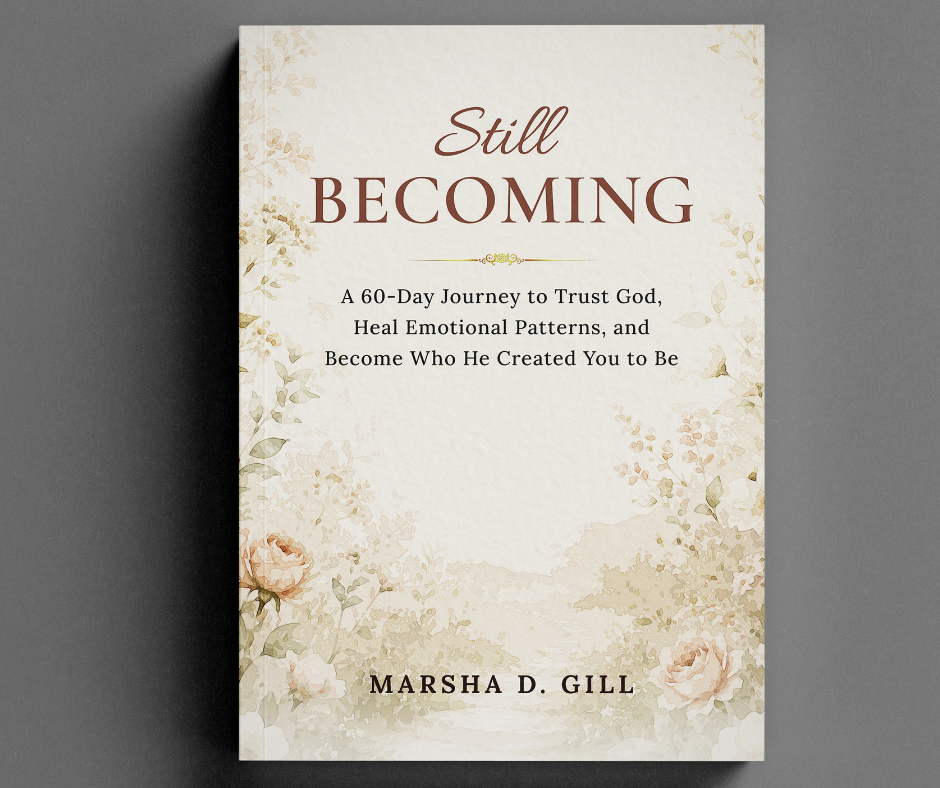
Continue Your Healing Journey with Still Becoming
Healing doesn’t happen in one conversation—or one blog post. It’s a journey of unlearning, learning, grieving, growing, and becoming. That’s why I wrote Still Becoming. This 60-day devotional is for women who are ready to break unhealthy emotional patterns, heal from the past, and move forward with greater confidence, self-awareness, and hope. Whether you’re navigating a strained relationship with your daughter, processing your own mother-daughter story, or simply longing to become a healthier version of yourself, each daily reading offers gentle encouragement, meaningful reflection, and practical steps toward emotional healing.
It’s about becoming more of the woman you were created to be.
Order your copy of Still Becoming today and begin one small step at a time.
You Don’t Have to Walk This Journey Alone
If you’re reading this and thinking, “I want to heal, but I don’t know where to begin,” you’re not alone.
For years, I’ve walked alongside mothers- adult daughters couples and women as they untangle generational patterns, process painful mother daughter dynamics, strengthen communication, and build healthier relationships rooted in honesty, compassion, and emotional safety.
Healing doesn’t happen because someone hands you all the answers. It happens because you have a safe place to ask the hard questions.
If you’re ready to better understand your story, heal the mother wound, and become the woman you want to be whether reconciliation happens tomorrow or years from now I would be honored to walk alongside you.
Through one-on-one coaching, we’ll explore:
- The patterns shaping your mother-daughter relationship.
- How your own story influences the way you love and communicate.
- Practical tools for emotional healing, healthy boundaries, and difficult conversations.
- A personalized path toward healing, growth, and lasting change.
You don’t have to figure this out by yourself.
Schedule a complimentary discovery call today and take the first step toward healing—not just your relationship with your daughter, but your relationship with yourself.
Because healing doesn’t begin when someone else changes. It begins the moment you decide your story doesn’t have to end where the pain began.