
I was at event and it was time to introduce myself. I shared what it is that I do and how I support women. I remember this lady say, I didn’t know that was a thing. You might be reading this and thinking the same thing. Maybe you’ve read something about the mother wound and immediately thought: That’s not me because my childhood wasn’t that bad. You had food. Clothes. A place to live. Maybe your mother worked hard, kept the house running, took you to school, showed up for important events, or made sure you had opportunities she never had. She wasn’t cruel. She didn’t abandon you. You can probably name plenty of things she did right. So why does something still feel…missing? Why is it hard to talk to her about certain things? Why do you find yourself saying, “I know my mom loves me, but…” And why do you feel guilty even putting the words mother wound anywhere near your story? Sometimes healing the mother wound isn’t about recovering from a childhood that was obviously terrible. Sometimes it means acknowledging the emotional needs that went unmet in a childhood that looked perfectly fine from the outside. And that can be surprisingly difficult to wrapour heads around.
What Is the Mother Wound?
The mother wound refers to emotional pain, unmet needs, beliefs, and relationship patterns that can develop through our experiences with our mothers or maternal figures.
It doesn’t automatically mean your mother was a bad mother. And it doesn’t require you to make her the villain of your story. Your mother may have loved you deeply while still being unable to give you something you needed emotionally. Maybe she provided but struggled to connect. Maybe she solved problems but didn’t know how to sit with feelings. Maybe she encouraged achievement but rarely asked what was happening inside of you.
Maybe she was physically present but emotionally difficult to reach. Both things can be true:
Your mother loved you. And there were still things you needed that you didn’t receive. Healing often begins when we stop forcing ourselves to choose between those two truths.
But She Did the Best She Could…
I hear versions of this often from adult daughters.
“My mom did the best she could.”
“She worked all the time because she was trying to provide for us.”
“She had a hard childhood herself.”
“We weren’t abused.”
“I always had what I needed.”
“Other people had it much worse.”
All of those things may be true. But notice what happens when you use those truths to immediately dismiss another one: there were emotional needs I had that weren’t met. Understanding why your mother couldn’t give you something doesn’t mean you have to pretend you didn’t need it. Her story can explain her limitations. It doesn’t erase your experience of them.
Being Taken Care Of and Emotional Connection Aren’t the Same Thing
One of the most confusing parts of healing the mother wound is recognizing that being provided for and feeling emotionally connected are not the same thing. A mother can work incredibly hard for her daughter. She can cook dinner, pay bills, buy school clothes, attend activities, help with homework, give advice, keep her daughter safe, and sacrifice tremendously for her family. Those are meaningful expressions of love. But a daughter may still grow up wishing someone had asked:
“How are you really doing?”
“What do you need?”
“What happened today?”
“How did that make you feel?”
“Do you want me to listen, or do you want help solving it?”
She may have needed comfort without correction. Curiosity instead of judgment. Affection without earning it. Space to be sad, disappointed, angry, scared, confused, or imperfect without feeling like her emotions were too much. Children have physical needs, but they have emotional needs too. And when emotional needs repeatedly go unnoticed, minimized, dismissed, or misunderstood, a child can learn to stop expecting someone to meet them.
Emotional Neglect Can Be Hard to See
This is one reason emotional neglect can be so difficult for adult daughters to recognize. Sometimes there isn’t a dramatic event to point to. There may not be one moment where you can say, “There. That’s what happened to me.” Instead, your story may be filled with what didn’t happen. You weren’t asked what you were feeling. You weren’t comforted when you were overwhelmed. Nobody noticed when you were struggling because you were the “good” daughter. Nobody helped you make sense of your emotions. Conflict was avoided rather than repaired. You learned to handle things yourself. You received praise when you achieved but little curiosity about who you were becoming. Nothing on that list necessarily sounds dramatic. But repeated emotional absence can still shape a daughter. Sometimes the wound isn’t only about what happened. It’s about what you kept needing that never happened.
Why You Keep Telling Yourself, “It Wasn’t That Bad”
Minimizing can become a way of protecting the story we’ve always known. Because acknowledging what was missing can bring uncomfortable questions.
Am I being ungrateful?
Am I blaming my mother?
What if she really did do her best?
Why am I complaining when other people experienced much worse?
What if I’m making something out of nothing?
So instead of exploring the hurt, you compare it. Someone else’s mother was abusive. Someone else’s mother left. Someone else’s childhood was worse. Therefore, you decide yours shouldn’t hurt. But pain doesn’t require a competition. You don’t have to prove that your childhood was “bad enough” before you’re allowed to become curious about how it affected you.
The High-Functioning Daughter Can Be Easy to Miss
Sometimes the daughter who received little emotional support becomes incredibly capable. She learns how to figure things out. She becomes responsible. Independent. Helpful. High-achieving. She reads the room. Keeps the peace. Handles her business. Doesn’t ask for much. People may even praise her for being so mature. But underneath that competence can be an old belief:
My needs are mine to manage.
So years later, she may struggle to ask for help. She may feel uncomfortable needing reassurance. She may over-explain herself. She may shut down when emotions become intense. She may become the woman everyone calls but rarely tells anyone when she needs someone. She may feel guilty setting boundaries because other people’s comfort feels more important than her own. Or she may repeatedly find herself in relationships where she is doing most of the emotional work. What once helped you function in your family can quietly become the pattern you carry into adulthood.
But I Know My Mom Loves Me
Yes. And healing doesn’t require you to deny that. One of the most important parts of mother wound healing is developing the capacity to hold more than one truth at the same time. My mother loved me AND I sometimes felt emotionally alone. She sacrificed for me AND there were things I needed that she didn’t know how to give. She had her own wounds AND her wounds affected me. I am grateful for what she gave me AND I can grieve what I didn’t receive. That little word and can create a lot of freedom. Because healing doesn’t have to begin with blame. It can begin with honesty.
How to Heal the Mother Wound When Your Childhood Wasn’t That Bad
Healing starts by moving away from the question: “Was my childhood bad enough?” And asking a more helpful question: “What did I learn about myself, my needs, my emotions, and relationships because of what I experienced?”
Here are a few places to begin.
1. Stop Grading Your Childhood
You don’t need to decide whether your childhood was good or bad. That question can keep you stuck because most childhoods contain both. Instead, get curious about your experiences.
Ask yourself:
What did I receive emotionally?
What did I need more of?
What happened when I was sad, angry, scared, disappointed, or overwhelmed?
Who comforted me?
Did I feel safe asking for what I needed?
Did I feel known—or mostly managed, corrected, protected, or provided for?
You’re not building a case against your mother. You’re learning your story.
2. Pay Attention to What You Minimize
Notice when you automatically follow your pain with a disclaimer.
“My mom wasn’t affectionate, but she worked really hard.”
“We never talked about feelings, but I knew she loved me.”
“I couldn’t really go to her emotionally, but she made sure we had everything.”
The words after the but may be true. Try replacing but with and.
“My mother worked incredibly hard for us and I needed more affection.”
“I knew my mother loved me and I wanted to feel emotionally closer to her.”
“She provided everything we needed and I learned to handle difficult emotions by myself.”
Notice how different that feels. You’re not taking anything away from her. You’re simply making room for you too.
3. Name What Was Missing
This can feel uncomfortable, especially if you’ve spent years being grateful for what you had. Try completing this sentence:
“I wish there had been more…”
More affection?
More conversations?
More curiosity?
More encouragement?
More emotional safety?
More play?
More reassurance?
More apologies?
More listening?
More permission to be imperfect?
Naming what was missing doesn’t mean your mother failed at everything. It helps you understand what your younger self may still be looking for today.
4. Notice Where the Old Pattern Shows Up Now
Ask yourself:
Where am I still living as though my emotional needs don’t matter?
Maybe you’re always the strong one.
Maybe you don’t ask for help until you’re exhausted.
Maybe someone’s disappointment immediately makes you feel guilty.
Maybe you don’t know what you need because you learned to focus on everyone else.
Maybe you keep trying to earn emotional connection by being useful, successful, agreeable, or easy to love.
This is where mother wound healing becomes less about changing your mother and more about changing your relationship with yourself.
5. Give Yourself What You Keep Waiting to Receive
There may still be a part of you hoping your mother will finally say the perfect thing. That she’ll ask the right question. Understand your experience. Acknowledge what happened. Become emotionally available in the way you’ve always wanted. Perhaps she will grow in some of those areas. Perhaps she won’t. Your healing doesn’t have to remain on hold while you wait. You can begin learning to notice your feelings, validate your needs, speak honestly, set boundaries, ask for support, and build emotionally safe relationships. You can learn to stay present with yourself instead of automatically minimizing what you feel. That is part of becoming the emotionally safe person your younger self needed.
You Don’t Have to Make Your Mother Wrong to Validate Yourself
Maybe your childhood really wasn’t “that bad.” Maybe there was laughter. Family traditions. Vacations. Sunday dinners. Sacrifices. Good memories. A mother who loved you in the ways she knew how. Those things matter.
But healing isn’t about searching your childhood for evidence that something terrible happened. It’s about becoming curious about the woman you are today and the story that helped shape her. You can appreciate what your mother gave you without pretending you didn’t need more. You can understand her story without disappearing inside of it. You can love her without minimizing yourself. And you can heal something even if nobody else agrees that it should hurt.
Ready to Explore Your Mother-Daughter Story?
If this felt familiar, you don’t have to figure your story out by blaming your mother—or yourself. Through MG Coaching Boutique, I help adult daughters and mother-daughter pairs explore the emotional patterns, unmet needs, family stories, and relationship dynamics that continue to shape how they connect today. My work is centered on curiosity rather than condemnation. We aren’t looking for someone to blame. We’re asking: What happened, what did you learn, what are you still carrying, and what would healing look like now?
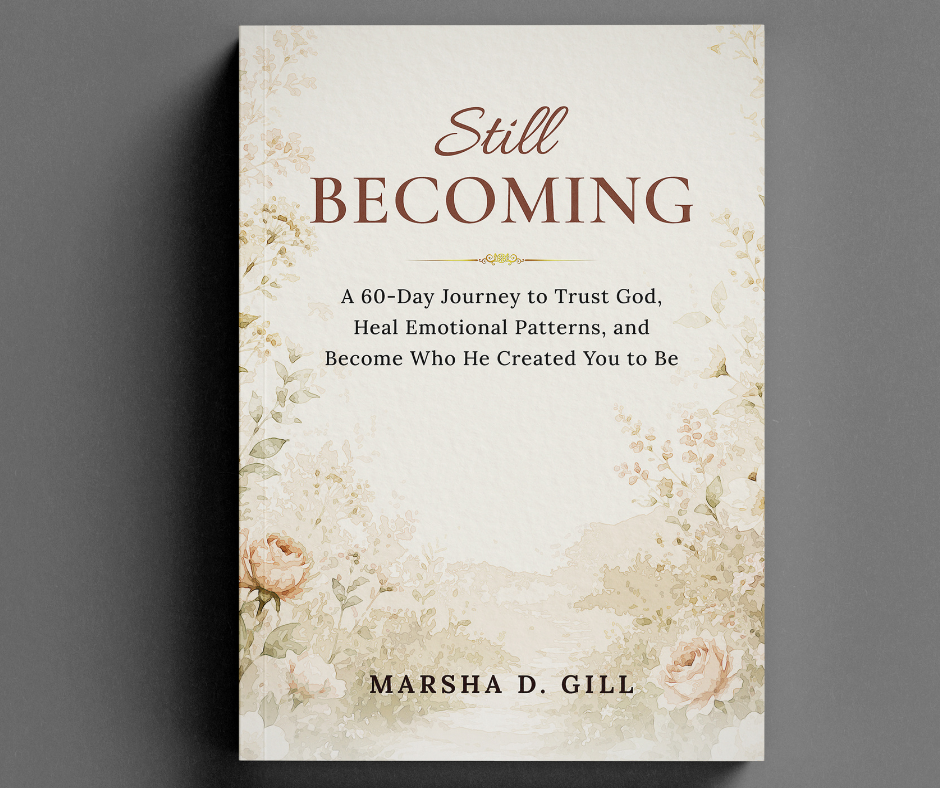
Let’s connect HERE. You can also continue your personal healing journey through my book, Still Becoming: A 60-Day Journey to Trust God, Heal Emotional Patterns, and Be Who He Created You to Be. Because your story doesn’t have to be terrible to deserve your attention. And what was missing doesn’t have to be dramatic to matter.