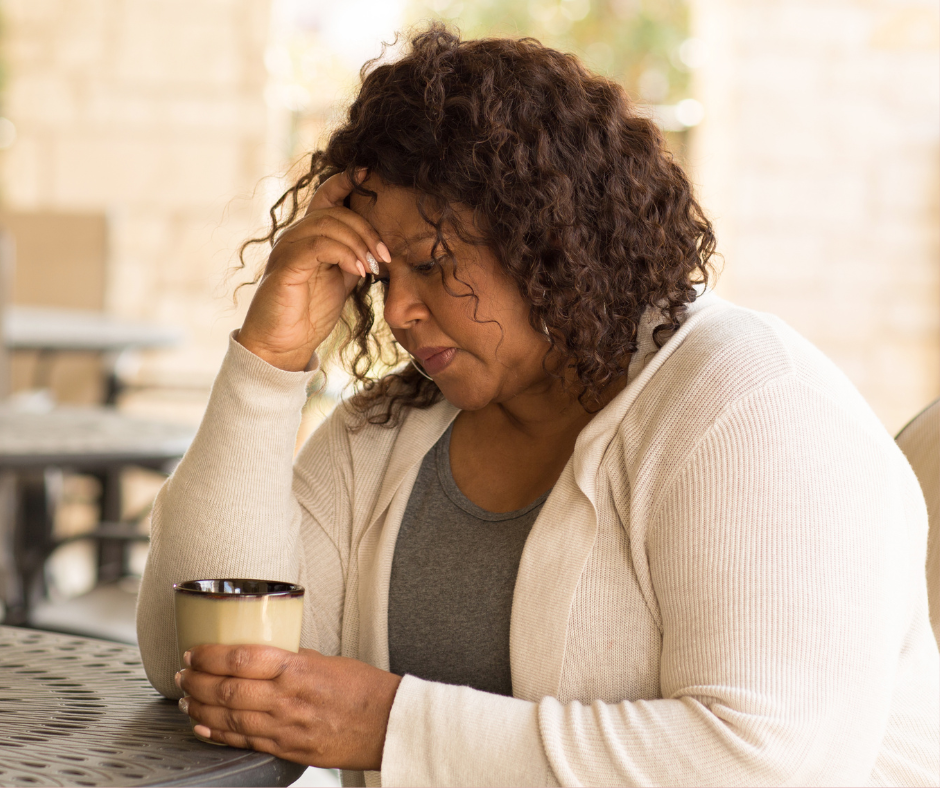

You sleep. You take a vacation. You drink the coffee. You try the tart green juice, the eight-hour night, the “self-care Sunday” everyone talks about. And you’re still tired. I’m not talking just physically tired. Not the kind of tired a nap fixes. Soul tired. The kind of exhaustion that follows you into a good day. The kind that’s there when nothing is even wrong.
If you grew up with a toxic, emotionally immature, controlling, or unpredictable mother, there’s a reason your body still feels like it’s carrying a weight nobody else can see. And here’s the thing I want you to hear first, before anything else: you’re not lazy, and you’re not broken. Your body learned something a long time ago, and it hasn’t gotten the memo that it’s allowed to put it down.
When you grew up walking on eggshells, your nervous system learned to stay on high alert. That kind of learning doesn’t switch off just because you moved out, got married, started therapy, or haven’t spoken to her in years. It has a name: chronic nervous system dysregulation — sometimes called survival mode, sometimes called hypervigilance.
A lot of adult daughters are living there full-time without ever realizing it’s not just “how they are.”
What Happens When You Grow Up Walking on Eggshells
Maybe your mother’s mood was the weather system the whole house had to plan around. One look, one sigh, one particular way she set down her coffee cup, and you knew. So you adapted. Kids are remarkably good at this — it’s actually a kind of genius, even though it cost you something enormous. You learned to listen for footsteps and know what kind of day it was going to be before she said a word. You became fluent in facial expressions the way other kids became fluent in a second language. You knew exactly when to go quiet, and exactly when disappearing into your room was the safest move on the board. You got good — really good — at anticipating what everyone around you needed before they’d said a single word out loud. Somewhere in there, your nervous system quietly stopped asking the question every child is supposed to get to ask:
“Am I safe?” And it started asking a different one instead: “What do I need to do to keep everyone else okay?” That’s not a personality trait. It’s not “just how you are” or “your natural sensitivity.” It’s a survival strategy your body built, brick by brick, because it worked. It kept you safer than the alternative. The problem is that strategies built for a house you no longer live in don’t know how to retire.
Your Body Doesn’t Know You’re Safe Yet
Here’s one of the hardest, and honestly one of the most freeing, truths about healing the mother wound: Your body often lives in yesterday, even when your mind knows today is different. You might have your own home now. Healthy, safe relationships. A steady job. A faith that grounds you. On paper, and even in your heart, you know you’re not in danger anymore. And yet your nervous system still runs the old program — behaving as if another emotional storm is one wrong move away. So you stay alert, even when there’s nothing to be alert to. You overthink a two-word text message for twenty minutes. You replay conversations from three days ago, looking for the moment you said the wrong thing. You apologize for things that were never your fault to begin with. You brace for rejection before anyone’s given you a reason to.
You feel guilty the second you sit down and do nothing. And little by little, without one single dramatic event, you become exhausted. Not from a crisis. From decades of low-key bracing that never got to stop.
Signs Your Nervous System Is Still Living in Survival Mode
See if any of these sound familiar:
- You feel personally responsible for how everyone around you is feeling
- You can’t fully relax, even when you’re somewhere beautiful, doing something you chose
- Resting comes with a side of guilt, like you’re getting away with something
- You’re constantly scanning a room, a conversation, a group chat, for the first sign of conflict
- You reread texts and emails looking for hidden meaning or tone
- Family gatherings leave you wiped out for days afterward, even good ones
- Saying “no” makes your heart race before the word is even out
- You keep yourself busy on purpose, because stillness feels dangerous, not peaceful
- You wake up tired, like the exhaustion started before your day did
- You feel like you’re “on” all the time — performing okay-ness rather than actually feeling it
So many women tell me the same thing, almost word for word: “I don’t even know why I’m so tired. Nothing’s technically wrong.” And often the honest answer isn’t that you’re doing too much. It’s that your nervous system has been quietly working overtime for decades, and it never got the all-clear to stand down.
Hypervigilance Is Expensive
Picture driving with one foot on the gas and one foot on the brake at the same time. You might get where you’re going. But something in that engine is going to wear out faster than it should have.
That’s what chronic emotional stress does to a body. Your brain stays in scan mode, constantly checking the environment for danger, even in rooms that are completely safe. Your muscles hold tension you’re not even aware of — clenched jaw, tight shoulders, a stomach that’s braced before you’ve even noticed you’re anxious. Your breathing goes shallow and stays there. Your mind never fully lands; it just keeps circling.
This is why so many adult daughters of toxic mothers deal with a cluster of things that seem unrelated but really aren’t:
- Mental fatigue that sleep doesn’t touch
- Anxiety that doesn’t always have an obvious trigger
- Brain fog, forgetfulness, trouble focusing
- Trouble falling asleep, or waking up wired at 3 a.m.
- Emotional numbness — feeling flat, far away, like you’re watching your own life
- Chronic, low-grade stress that never fully resolves
- Burnout, even in seasons that “shouldn’t” be that hard
- A sense of being disconnected from your own body and feelings
Here’s what I want you to really sit with: your body isn’t failing you. It’s not malfunctioning. It’s protecting you the only way it ever learned how — the way that kept a much smaller, much more vulnerable version of you as safe as she could be. It’s just still running that same program, years after the danger it was built for is gone.
Was This Survival Mode Passed Down to You?
Here’s a question worth sitting with, even if it stings a little: was your mother ever taught how to be safe, either?
Survival mode is rarely a one-generation story. More often, it’s a relay race — passed hand to hand, mother to daughter, long before anyone in the family had language for what was actually happening.
Think about it this way. Your mother didn’t wake up one day and decide to be unpredictable, controlling, or emotionally unavailable. Somewhere in her story, there’s a good chance she learned the exact same lesson you did: that love was conditional, that her needs came last, that her body had to stay braced to stay safe. Maybe it came from her own mother. Maybe from a chaotic home, a scarce childhood, a unavailable spouse, a culture or generation that had no room for feelings at all. Nobody handed her a nervous system that knew how to rest, so she couldn’t hand you one either. That doesn’t excuse what happened to you. Understanding where a pattern came from is not the same as approving of it, and you’re allowed to hold both: compassion for the wound your mother carries, and full accountability for the harm it caused you. Those two things can be true at the same time.
But naming the pattern matters, because it changes the question you’re asking. It’s no longer just “What’s wrong with me?” It becomes: “What generations-old pattern did I inherit, and am I willing to be the one who finally interrupts it?” That’s not a small thing. That’s the work of a lifetime — and it’s also entirely possible. Nervous systems can learn new patterns at any age. The cycle that’s been running in your family for generations doesn’t have to keep running in you, and it doesn’t have to run in your own children or the young women in your life either. You can be the generation where it stops.
The H.E.A.L. Formula: A Framework for Coming Out of Survival Mode
When women ask me where to even begin, I walk them through a simple framework I call H.E.A.L. It’s not a quick fix — nothing that took decades to build gets undone in a weekend — but it gives your nervous system a clear, repeatable path forward.
H — Honor What You Survived Before anything else, stop minimizing it. “It wasn’t that bad” and “other people had it worse” are sentences that keep you stuck in survival mode, because they tell your nervous system its alarm was never valid in the first place. Honoring your story means letting it be exactly as hard as it was, without needing anyone else’s permission to call it that.
E — Examine the Pattern Get curious instead of critical. When you notice yourself over-apologizing, bracing, or scanning a room for danger that isn’t there, pause and ask: Whose voice is this? Whose rule am I still following? Examining the pattern takes it out of the shadows, where it runs your life automatically, and puts it somewhere you can actually make a choice about it.
A — Anchor in Safety This is where the body comes in. Breathwork, grounding, prayer, stillness, a hand on your own chest — anything that tells your nervous system, in a language it actually understands, you are safe right now. Anchoring isn’t a one-time event. It’s a practice you return to daily, sometimes hourly, until safety starts to feel familiar instead of foreign.
L — Lean Into Support Survival mode convinced you that you had to do everything alone, because alone was the only thing that ever felt reliable. Healing asks you to unlearn that. You were never meant to carry this by yourself, and you don’t have to figure it out in isolation now. This is where community, mentorship, and coaching become less of a luxury and more of a lifeline.
Healing Begins When Your Body Learns It Doesn’t Have to Brace Anymore
Healing the mother wound isn’t only a mental exercise — it’s not just reframing your thoughts or understanding the “why” behind your mom’s behavior, even though that understanding matters.
It’s helping your body learn, on a cellular level, that it’s actually safe now. And that takes time. It takes real compassion for the parts of you that are still bracing. And often, it takes grieving. I mean actually grieving the childhood you deserved and didn’t get. Not the childhood your mother says she gave you, or the version your family agreed to remember. The one you actually needed and didn’t receive.
You don’t have to force yourself to “just get over it.” That was never a real strategy anyway; it just adds shame on top of exhaustion.
What you can do is slowly, patiently teach your nervous system a new story. One line at a time:
- Rest is safe.
- Boundaries are safe.
- Saying no is safe.
- Being fully yourself, opinions and all, is safe.
- Receiving love — without earning it first — is safe.
That’s what real healing looks like. It’s rarely dramatic. It’s usually quiet, repetitive, and unglamorous — which is exactly why it works.
What Helps an Overworked Nervous System?
Healing isn’t about adding more to your plate. Most of the women I talk to are already doing “more” — more effort, more self-monitoring, more trying to get it right. What actually helps is often doing less, but with a lot more intention behind it.
Try sitting with questions like these, even if the answers don’t come right away:
- What am I actually preparing for right now?
- Is there real danger here, or is this my body remembering old pain?
- What would emotional safety feel like today, in this moment?
- What would I do differently if I believed I didn’t have to earn peace?
And then, some small, doable ways to start retraining your nervous system:
- Slow, intentional breathing — even ninety seconds of it, a few times a day
- Daily moments of quiet with God — not a performance, just presence
- Naming your emotions without judging them — “I feel anxious” instead of “I shouldn’t feel anxious”
- Setting one small, honest boundary this week — just one
- Choosing rest without apologizing for it, even silently, even if the guilt shows up anyway
- Working with a coach who understands the mother wound and trauma specifically — this isn’t something you have to figure out alone
Healing happens one safe experience at a time. One felt experience of safety, repeated enough times that your body finally starts to believe it. You’ve spent a long time being the strong one, the watchful one, the one who kept everyone else steady. You’re allowed to put that down now. Even just for a minute. Even just today.
You Don’t Have to Untangle This Alone
If any part of this post felt like it was written about your life, that’s not a coincidence — it’s a sign you’re ready for the next step. Whether you’re carrying the weight of your own healing, or you’re hoping to break the cycle with your own daughter before survival mode gets handed down another generation, there’s a coaching path for that.
Individual Coaching is where we work one-on-one to help your nervous system finally learn what safety feels like — walking through the H.E.A.L. framework at your pace, with someone in your corner who understands the mother wound from the inside out.
Mother-Daughter Coaching is for those of you ready to do this work together — repairing communication, rebuilding trust, and creating a new pattern for your relationship instead of passing the old one down unexamined.
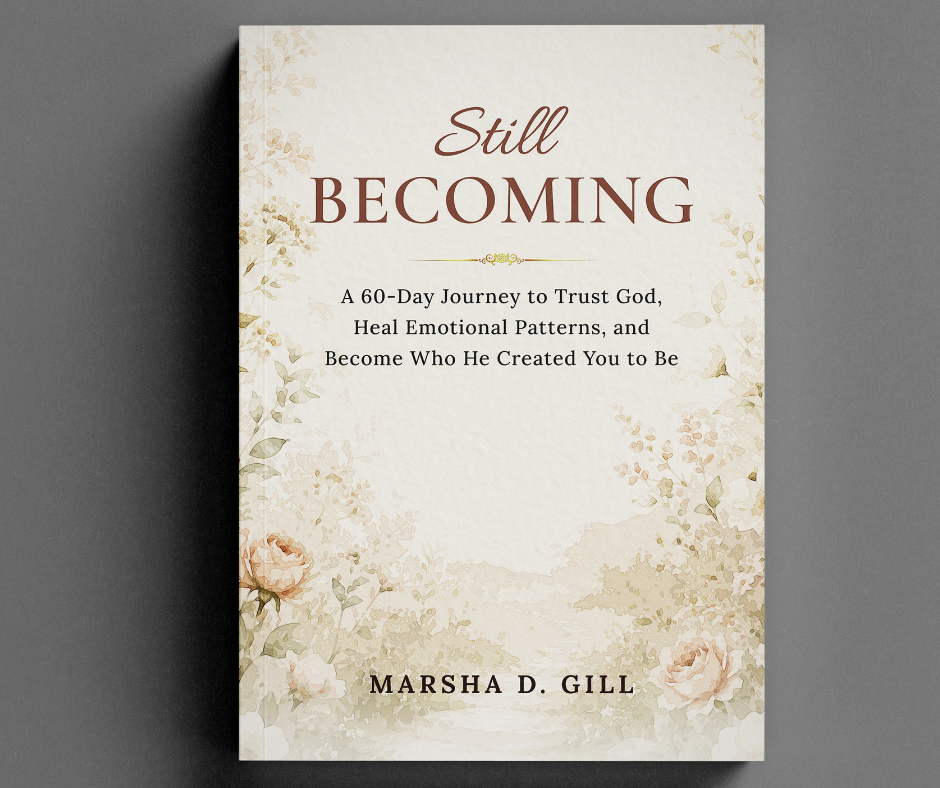
Still Becoming if this article spoke to your heart, my devotional, Still Becoming: A 60-Day Devotional for the Woman Learning to Trust, Heal, and Grow in the Waiting, is a companion for women seeking emotional healing, deeper faith, and renewed hope. Through daily Scripture, reflections, and journal prompts, you’ll discover that healing is a journey—and God is faithfully with you every step of the way.
Find Still Becoming on Amazon and take your next step toward healing and wholeness.
You don’t have to keep white-knuckling your way through exhaustion, guilt, and hypervigilance. You don’t have to figure this out alone, and you don’t have to wait until you hit rock bottom to ask for support.
Ready to start? Sign up for Individual Coaching or Mother-Daughter Coaching today, and let’s begin teaching your nervous system a new story — one safe experience at a time.