
You know you need to add some expectations. You’ve rehearsed what you want to say in your head. You’ve talked yourself into it. Maybe you’ve even practiced it with a friend. Then it’s time to actually say it to your mothern and suddenly the guilt shows up. What if she thinks I’m being disrespectful? I don’t want to hurt her feelings. What if she gets angry? I don’t want her to stop talking to me? What if I’m making too big a deal out of this? So instead of setting the boundary, you tell yourself, It’s fine. I can handle it. Except you’re not fine. You’re frustrated, resentful, emotionally drained, or pulling away because distance feels easier than having the conversation. If this sounds familiar, learning how to heal the mother wound and set boundaries without guilt may require looking at more than the boundary itself and getting to the root. Because sometimes the hardest part isn’t saying no. It’s what saying no brings up inside of you.
What Is the Mother Wound?
The mother wound describes emotional pain, unmet needs, beliefs, and relationship patterns that can develop through your relationship with your mother or maternal caregivers.
It doesn’t automatically mean you had a bad mother. Your mother may have loved you deeply and still had limitations. She may have been doing the best she could with the emotional, relational, financial, cultural, or generational resources she had available to her. And you can understand her story while also acknowledging the impact your experiences had on you. The messages we receive early i life, don’t necessarily disappear because you become an adult. You may be 35, 45, 55, or 65 years old and still feel like a little girl inside when your mother sounds disappointed with you. That’s one reason boundaries can feel so complicated.
Why Do I Feel Guilty Setting Boundaries With My Mother?
Here’s something I want you to consider: Feeling guilty does not always mean you are doing something wrong. Sometimes guilt shows up because you’re doing something different. If you have spent years being the daughter who accommodates, fixes, explains, keeps everyone happy, answers every call, avoids conflict, or says yes when she really wants to say no, a boundary can feel uncomfortable simply because it interrupts an old pattern.
Your nervous system may interpret that change as danger: Someone might be disappointed with me. Mom might be upset. She might think I’ve changed. What if this damages our relationship? So you go back to what feels familiar. You overexplain. You apologize. You change your mind. You say yes. And then resentment begins building underneath the relationship. This is where healing the mother wound and boundary work often meet.
The Connection Between the Mother Wound and People-Pleasing
Many adult daughters don’t think of themselves as people-pleasers. They think: I’m just helpful. I don’t want to hurt anybody. It’s easier if I do it myself. I hate conflict. Family is important to me.
And all of those things may be true. But there’s an important question underneath them: What happens inside of you when someone you love is disappointed with your decision? Can you tolerate their disappointment without immediately trying to fix it? That is often where the deeper work begins. When your emotional safety depends on everyone around you being okay with you, boundaries can feel threatening. Healing means learning that another person can be disappointed, confused, frustrated, or even disagree with you—and you can still remain connected to yourself.
7 Ways to Heal the Mother Wound and Set Boundaries Without Guilt
1. Get Curious About What Guilt Is Really Saying
Before trying to get rid of guilt, listen to it. Ask yourself: “What am I afraid this boundary will mean about me?” Maybe the answer is: I’m selfish. I’m a bad daughter. I’m ungrateful. I’m hurting my mother. I should be able to handle this. Then go one step deeper: “Where did I learn that?” Healing begins when we replace automatic self-judgment with curiosity. Instead of What is wrong with me?
Try: What happened in my story that made this so difficult for me? That question creates room for understanding.
2. Separate Guilt From Responsibility
There is a difference between feeling responsible for someone’s emotions and actually being responsible for them. You are responsible for communicating respectfully. You are responsible for your choices. You are responsible for repairing harm when you genuinely cause it. But you are not responsible for making sure your mother never feels disappointed, uncomfortable, sad, or frustrated. That distinction matters. You can say something with love and still receive a response you didn’t want. Her reaction does not automatically determine whether your boundary was wrong. Try reminding yourself: “I can care about how my mother feels without making her feelings my responsibility to fix.”
3. Ask Whether You Need a Boundary—or a Conversation
Not every uncomfortable mother-daughter moment requires a firm boundary. Sometimes you need a conversation. Sometimes you need to make a request. Sometimes you need to clarify expectations. Sometimes you need to stop assuming Mom knows what you need and actually tell her. And sometimes, yes, you need a clear boundary. Before responding, ask: “What do I actually need here?” Maybe you need: “I’d like you to call before coming over.”
Or: I’m not looking for advice right now. I just need you to listen.” Or: “I don’t want to discuss my marriage.” Or simply: “I can’t do that this weekend.” Healthy boundaries aren’t about controlling your mother. They are about becoming clearer about your own participation.
4. Stop Overexplaining Your No
Have you ever started with: “No, I can’t…” and somehow ended up giving a seven-minute presentation complete with supporting evidence? That often happens when we’re hoping our explanation will make the other person approve of our boundary. But the more afraid we are of disappointing someone, the more we tend to explain. You can be kind without giving a dissertation. Instead of: “I’m so sorry. I know you really wanted me there, and I feel terrible, but work has been crazy and the kids have things going on and…” Try: “I won’t be able to make it this time, but I hope you all have a wonderful time.” Warm. Clear. Done.
5. Expect Some Discomfort When You Change an Old Pattern
If you have spent 30 years saying yes, your first no probably isn’t going to feel natural. That doesn’t mean you’re doing it wrong. It means you’re practicing something new. Your mother may need time to adjust too. Remember: when one person changes her role in a relationship, the relationship has to adjust. If Mom is accustomed to you always being available, always sharing certain information, or always changing your plans, your new boundary may surprise her. You don’t have to interpret every uncomfortable response as proof that the boundary failed. Sometimes discomfort is simply part of change.
6. Set Boundaries Before You Become Resentful
One of the biggest misconceptions about boundaries is that they’re something we use after we’re already angry. Healthy boundaries often work best before resentment takes over. Pay attention to your internal signals. Maybe you notice yourself thinking: Why does she always call me with this? I don’t want to go, but I know I’m going to say yes. Every time we discuss this topic, I leave upset. I’m tired of explaining myself. Resentment can sometimes be information. It may be telling you that you’ve been agreeing to something your heart has been saying no to for a long time. Instead of waiting until you explode or completely withdraw, get curious earlier.
What do I need? What am I continuing to agree to? What conversation have I been avoiding?
7. Learn to Stay With Yourself After the Boundary
This is the part we don’t talk about enough. You set the boundary. Mom gets quiet. Or she sounds disappointed. Or she says, “Well, I guess things are different now.” And immediately you want to take everything back.
This is where your healing work matters. Instead of rushing to fix the discomfort, stay with yourself. Take a breath. Journal. Pray. Talk to someone you trust. Ask: “Did I communicate respectfully?” “Was the boundary necessary for my emotional well-being?” “Am I uncomfortable because I did something wrong—or because I did something different?” That last question can change everything.
What Healthy Boundaries With Your Mother Can Sound Like
Boundaries don’t always have to sound harsh. They can sound like: “I love talking with you, but I don’t want to discuss that topic.” “I know you’re concerned. I’ve decided how I want to handle it.”
“I can’t help with that today.” “Mom, when I share something difficult, sometimes I need you to listen before giving me advice.” “I’d rather not talk about my body or weight.” Notice what’s missing? A long defense.
An accusation. A character attack. You can be clear and compassionate at the same time.
Boundaries Are Not Punishment
A boundary is not:
I’m going to make you pay for hurting me. A healthier boundary sounds more like: “I recognize what I need in order to participate in this relationship in a healthier way.” That difference matters.
Boundaries aren’t supposed to become another weapon in the relationship. They’re not about proving who’s right. And they’re not about forcing your mother to change. Your boundary tells someone what you will do, what you will participate in, what you will discuss, and what you need to remain emotionally well. You can love your mother and have boundaries. You can understand her story and still have boundaries. You can forgive and still have boundaries. You can have a close relationship and still have boundaries. And sometimes, boundaries actually make connection safer because resentment is no longer quietly running the relationship.
Healing the Mother Wound Isn’t About Blaming Your Mother
This is important. Healing isn’t about putting your mother on trial. Your mother’s story matters too. Maybe she wasn’t taught how to communicate emotions. Maybe nobody asked what she needed.
Maybe she learned that love meant sacrifice. Maybe she had to become strong long before she was ready. Maybe boundaries weren’t modeled in her family either. Understanding those things can create compassion.
But compassion does not require you to ignore your own experience. Two stories can be true at the same time. Your mother may have done the best she knew how to do. And there may still be things you need to heal.
That’s not blame. That’s honesty.
You Can Love Your Mother Without Losing Yourself
Learning how to heal the mother wound and set boundaries without guilt doesn’t mean you’ll never feel guilty again. The goal isn’t necessarily to make every uncomfortable feeling disappear. The goal is to stop allowing guilt to make every decision for you. You can notice guilt without obeying it. You can disappoint someone without disrespecting them. You can say no without becoming unloving. You can care deeply about your mother without carrying responsibility for every emotion she experiences. And you can create boundaries that aren’t walls—but clearer doors into healthier connection. Sometimes healing looks like having the conversation you’ve avoided.
Sometimes it looks like changing an old pattern. Sometimes it looks like recognizing the younger part of you that still believes love has to be earned by being easy, helpful, agreeable, or endlessly available. And gently teaching her something new: You are still worthy of love when you have needs.
Ready to Go Deeper?
If you recognize yourself in these patterns, this is the work I help women explore through Mother-Daughter and Inner Daughter Relationship Coaching. We look beyond “Just set a boundary” and explore the story underneath the guilt, people-pleasing, perfectionism, emotional shutdown, over-functioning, and fear of disappointing others. Because sometimes the boundary isn’t the hardest part. It’s believing you’re allowed to have one.
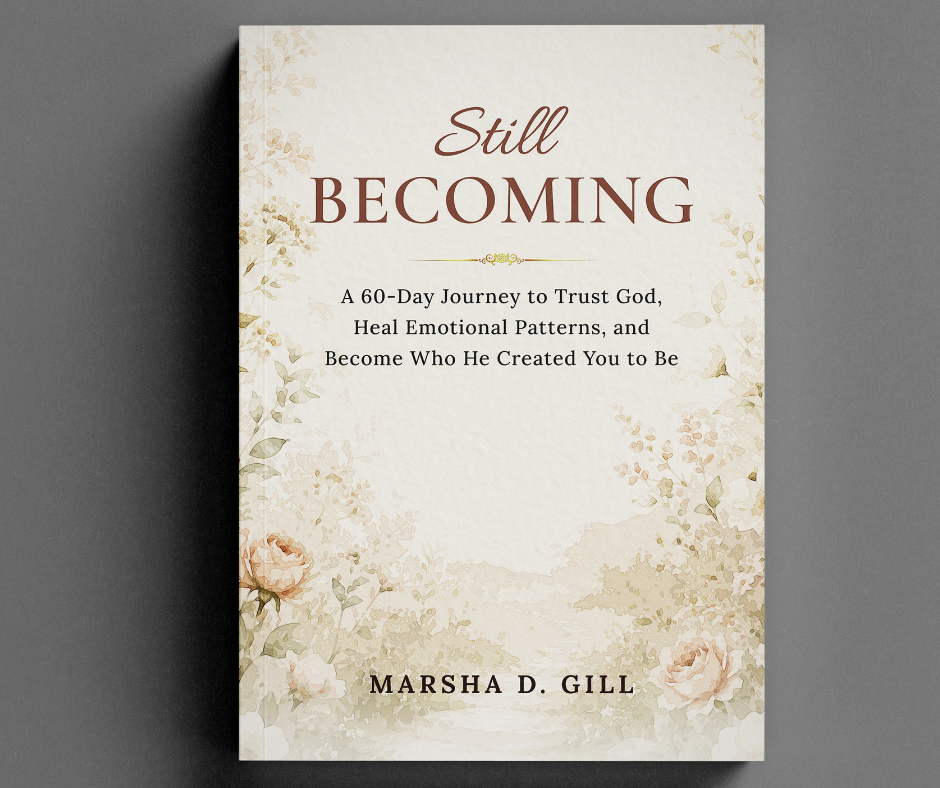
You can learn more about working with me through MG Coaching Boutique. And if you’re in a season of healing, reflection, and rediscovering who you are beyond old emotional patterns, my book, Still Becoming: A 60-Day Journey to Trust God, Heal Emotional Patterns, and Be Who He Created You to Be, offers 60 days of Scripture, reflection, journal prompts, and prayer to help you continue the journey.
You don’t have to have your whole story figured out. You’re still becoming.